
Refonte SEO

La Refonte insights
Is your website redesign approaching, and are you worried about losing the rankings you worked so hard to earn? This guide shows you how to turn that risk into an opportunity for SEO growth.
Refonte SEO

SEO
Refonte
You have spent months, perhaps years, building your visibility on Google. Your pages are finally ranking for the strategic searches in your sector. Then the decision lands: the website needs a redesign. Our page on Website Structure explains the next step.
The concern is justified. A website redesign really can wipe out organic search performance within days. We have all seen businesses fall from Google's first page into digital obscurity after a supposedly simple redesign.
But there is good news. With a methodical approach, your redesign can accelerate SEO instead of holding it back. This guide explains how to protect and even improve your rankings during and after the migration.
An SEO website redesign is not a separate discipline. It means placing organic search at the heart of your redesign project. Every technical, editorial and structural decision is assessed for its effect on your visibility in Google.
That means anticipating the consequences of every change: a new site structure, amended URLs, removed pages or a different CMS. If your redesign also involves changing host or server, our WordPress migration guide covers the technical steps required to move your website without losing data or indexation. Every one of these changes directly affects how search engines crawl, index and rank the site.
The difference between a conventional redesign and an SEO-led redesign is simple. The first concentrates on design and functionality. The second adds a strategic layer that protects and improves the search equity you have already built. Before you begin, we recommend carrying out a complete audit of your existing website to identify the SEO assets worth preserving.
Google does not see your website as you do. To a search engine, it is a collection of URLs, content and links. Change any one of those elements without taking precautions and you can trigger a domino effect.
The most common example is changing URLs without redirects. Imagine that your page at /services/marketing-consulting ranked third, then became /services/marketing-support. Google treats those as two different pages. The old one disappears and the new one starts from scratch. The backlinks you worked hard to earn now lead to a 404 error.
One of our construction-sector clients learnt this the hard way. After a purely visual redesign by an agency with limited SEO expertise, its organic traffic fell by 65% in three weeks. All 47 of the quality backlinks it had earned pointed to pages that no longer existed. Recovering its original rankings took eight months.
Other common traps include removing valuable content because it looks too old, changing the internal-link structure, moving to a technically weaker CMS, and increasing load times enough to drive away users and Google alike.
The impact of a poorly planned redesign
-65%
Average traffic decline
8 months
To recover rankings
47%
Of backlinks lost
0
Redirects means disaster
Not every redesign carries the same level of SEO risk. Understanding the nature of your project helps you choose the right degree of protection. To take this further, read Website Under Maintenance.
| 01Type of redesign | 02SEO risk | 03What to watch |
|---|---|---|
| 01Visual redesign only | Low | Retain URLs and content. Monitor how new imagery affects load times. |
| 02Structural redesign | High | The site structure and URLs change. A redirect plan is essential. |
| 03CMS migration and redesign | Very high | Everything changes: URLs, structure and sometimes content. A complete audit and post-migration monitoring are essential. |
Visual redesign only
Structural redesign
CMS migration and redesign
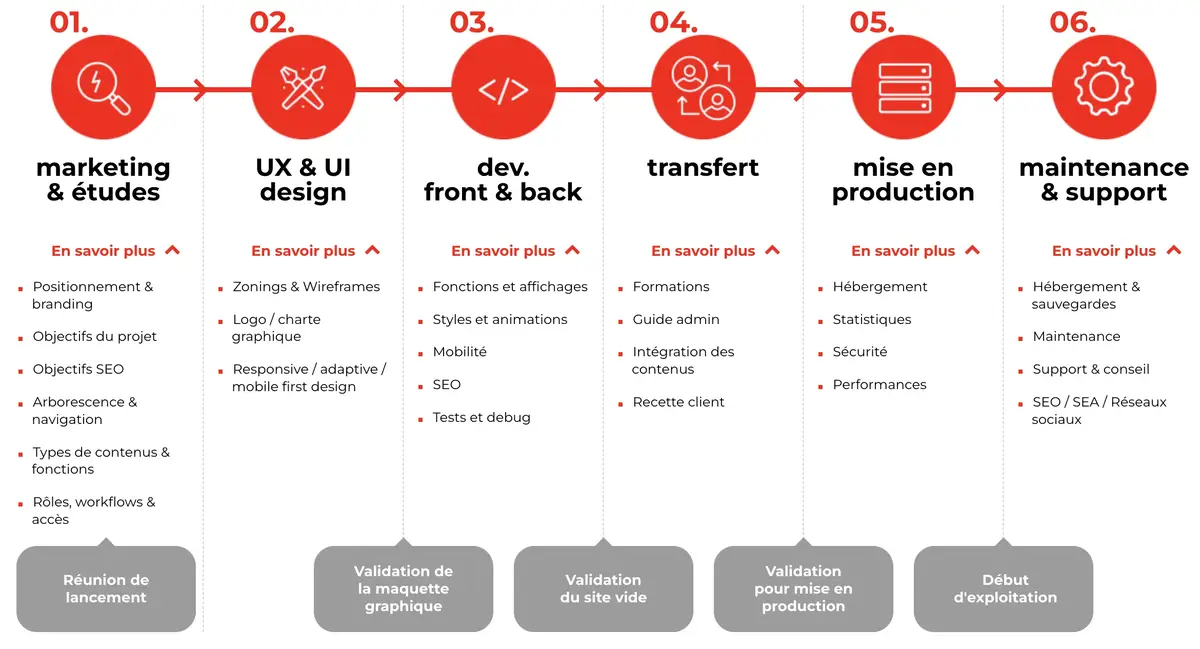
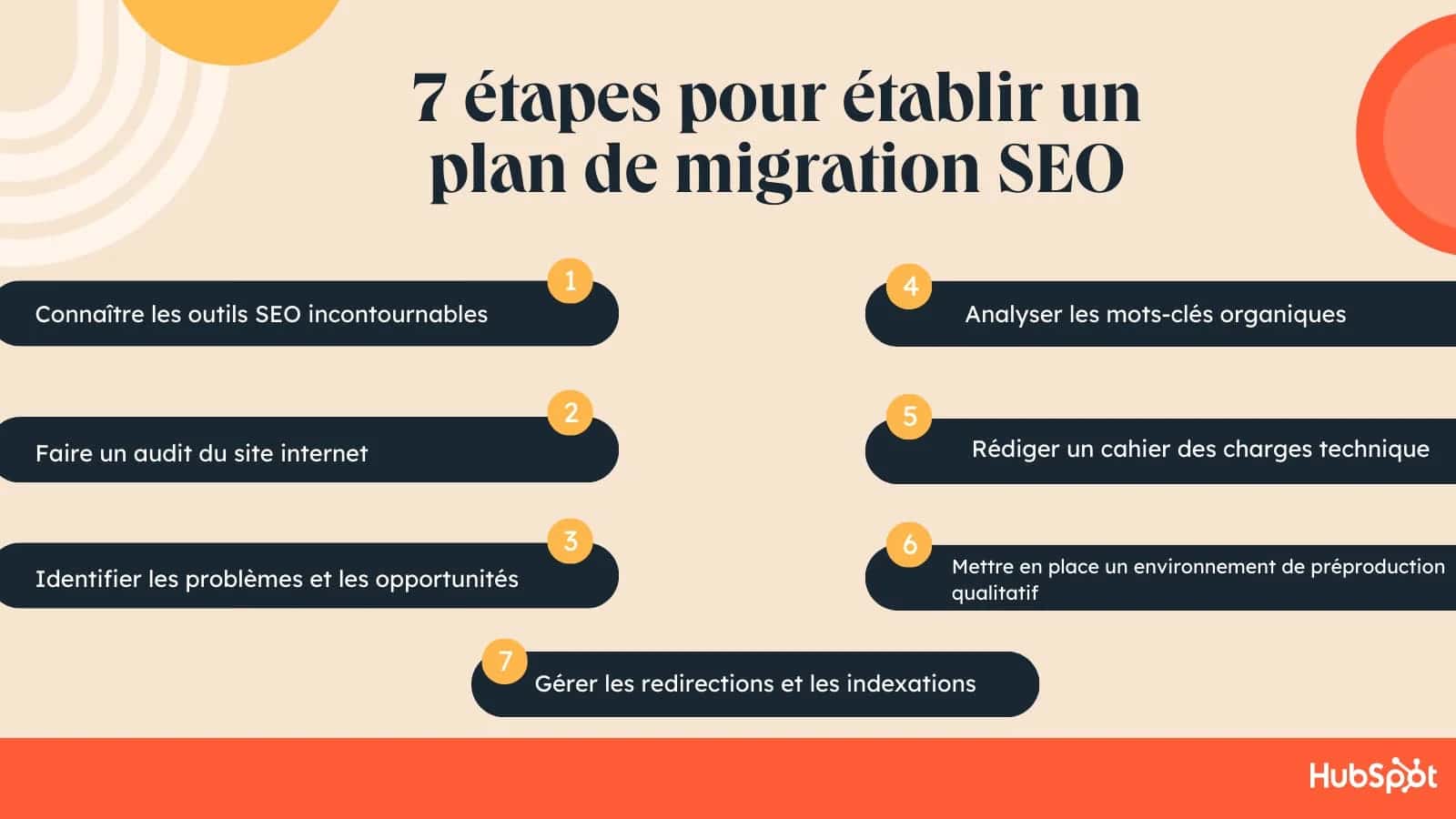
A sound method is what separates a redesign that lifts a website from one that sinks it. Here is the process we use at La Refonte for every SEO website redesign project.
Étape 1
Map the pages that perform, your backlinks and your positions for strategic keywords. This snapshot of existing SEO equity becomes your benchmark. Use Screaming Frog to crawl every URL and Google Search Console to identify the queries already driving results.
Étape 2
Create a comprehensive table pairing each current URL with its new destination. Every page on the old site needs somewhere to go. Retained pages either keep their URL or receive a 301 redirect. Pages being removed should redirect to the most relevant parent page.
Étape 3
Turn the URL map into an .htaccess file or the appropriate redirect rules for your server. Test every redirect before launch. A single mistake can cost rankings.
Étape 4
Use the redesign to improve title tags and meta descriptions, strengthen content structure, optimise images and reduce load times. A redesign is an opportunity to improve, not merely to preserve what already exists.
Étape 5
Deploy the new website to a staging environment. Confirm that redirects work, robots.txt does not exclude important pages and sitemap.xml is current. Crawl the staging site with Screaming Frog.
Étape 6
Launch the new website, enable the redirects and submit the new sitemap in Google Search Console. Monitor how the new pages are indexed.
Étape 7
The first three months are critical. Monitor rankings, organic traffic and crawl errors in Search Console every day. Correct any anomaly as soon as it appears.
Across ten years of SEO redesigns, we have repeatedly seen the same mistakes turn promising projects into disasters.
Use this checklist as a safeguard at every stage of the project. For a more detailed approach, see our SEO redesign method, which covers every aspect of the work.
SEO is not an optional part of a website redesign. It is essential if you care about your visibility in Google. Businesses that neglect it pay a steep price through lost traffic, fewer leads and ground conceded to competitors.
With a rigorous method, however, including an initial audit, comprehensive URL mapping, flawless redirects and post-migration monitoring, the redesign becomes a growth engine. Some websites double their organic traffic within six months of a well-run SEO redesign. To develop the strategy further, our 2026 SEO optimisation guide for SMEs explains the editorial and technical measures you can pursue alongside it.
At La Refonte, SEO is part of the project from the first scoping meeting. Search performance is not a detail to address afterwards; it is the foundation of digital visibility. If you are considering a redesign, explore our complete website redesign service or contact us for an audit of your current position.
SEO audits, content strategy and technical optimisation to help you climb Google's results.
Keep exploring


A project in mind?
Start with a free audit grounded in your goals, website and data.
Discutons de votre projet
30 min · Google Meet
Choisissez le créneau qui vous convient dans notre calendrier. On analyse votre situation avant l’appel pour aller droit au but.
Finding available times...