Refonte

La Refonte insights
A complete guide to the UI designer role: definition, difference from UX, required skills, salaries by experience, essential tools and routes into the profession.
Refonte
Design

SEO
A UI designer, or User Interface designer, creates the visual appearance of digital interfaces including websites, mobile applications and software. They choose colour, typography, button placement and graphic elements to make navigation smooth and enjoyable.
With 88% of users not returning after a poor visual experience (Forrester, 2023), the role extends beyond appearance. The UI designer turns functional needs identified by UX into concrete interfaces for developers to build. Their work directly affects conversion rate, time on site and brand perception.
For an SME investing in effective website design, understanding the UI role helps recruit the right person or scope a freelance brief. The profession sits where graphic design, usability and front-end development meet.
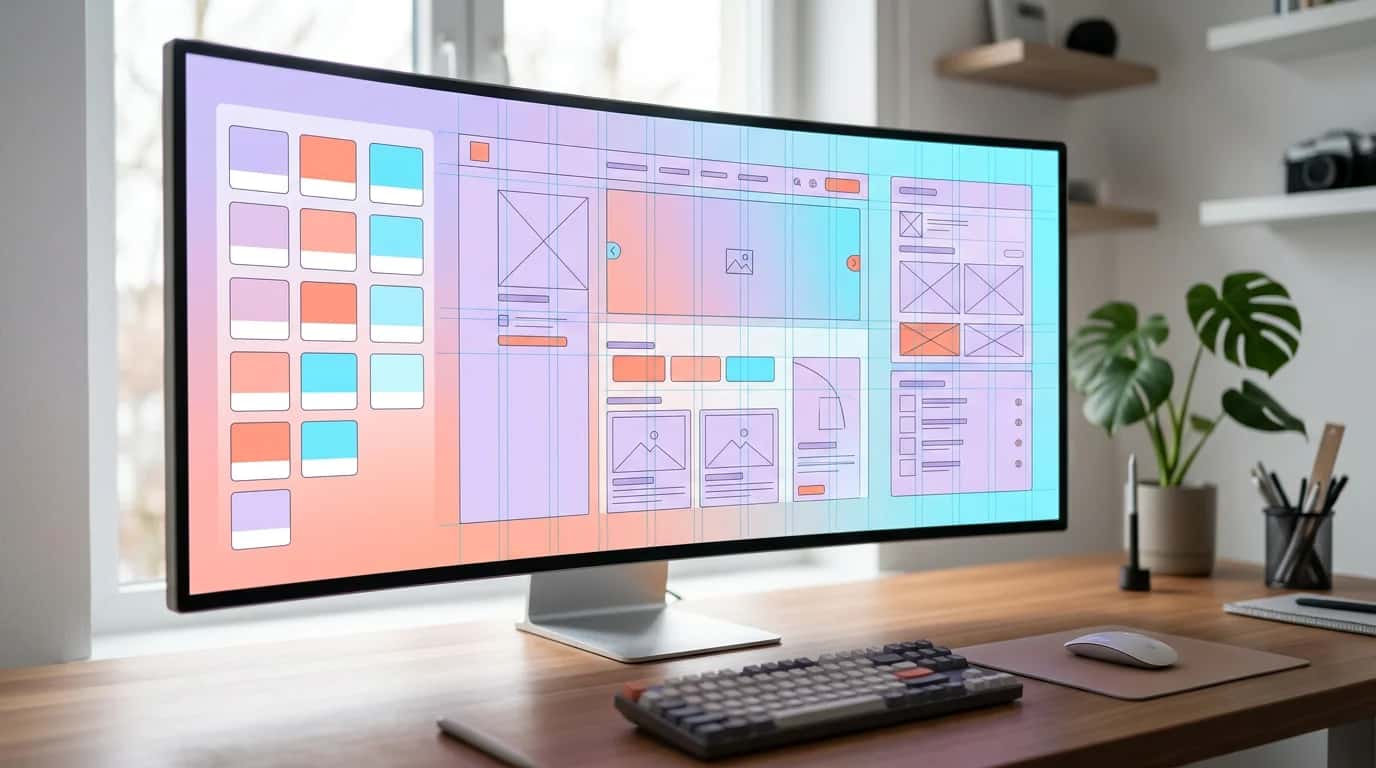
UX and UI are frequently confused, even in technology companies. The UX designer concentrates on the complete journey through research, information architecture, wireframes and usability tests. The UI designer then gives those wireframes a coherent visual identity (NNGroup, 2024).
For example, UX decides that a contact form needs three fields and a submit button. UI chooses their size, button colour, hover animation, label typeface and spacing. They are complementary but separate professions. Our UX and UI guide explains each stage.
In SMEs and start-ups, one 'UX/UI designer' often combines both. This reduces cost but requires a rare dual skill set. Companies above 50 employees generally separate the roles for greater depth (McKinsey Design Index, 2023).
88%
of users leave a poorly designed website (Forrester)
€32k–€60k
gross annual salary range in France
85%
of UI designers use Figma daily
+25%
growth in French UI vacancies between 2023 and 2025
The work extends far beyond 'choosing colours'. It covers the full interface cycle from initial brief to final mock-ups for developers. InVision research among 3,000 designers found that 67% spend over half their time on high-fidelity mock-ups and interactive prototypes (InVision, 2023).
The UI designer analyses the creative brief and UX wireframes, then defines the design system: colour palette, type scale, layout grid and reusable buttons, cards and forms. This ensures visual coherence across every page or screen.
They then produce pixel-perfect mock-ups in Figma or Adobe XD and clickable prototypes. Client feedback and user tests lead to several iterations. Delivery includes technical specifications for pixel spacing, hex colours and exported assets so developers reproduce the design faithfully.
UI design requires creative and technical skills. Graphic-design fundamentals come first: composition, colour theory, visual hierarchy and typography. Without them, even the best tools produce incoherent interfaces (UXPA International, 2024).
Understanding HTML and CSS comes second. UI designers need not code applications, but should understand responsive design, loading performance and browser limitations. This prevents expensive back-and-forth with developers. Our responsive testing guide covers current standards.
The third major skill is advanced Figma or equivalent: components, auto layout, variables and prototyping. Recruiters routinely test it. Experienced designers produce complete, documented design systems usable by a whole team.
| 01Skill | 02Required level | 03Why it matters |
|---|---|---|
| 01Graphic design (colour, type, composition) | Expert | Foundation of every coherent interface |
| 02HTML / CSS understanding | Intermediate | Smooth collaboration with developers |
| 03Figma (components, auto layout, prototyping) | Expert | Market standard with 85% adoption |
| 04Design systems (creation and maintenance) | Advanced | Visual consistency at scale |
| 05Accessibility (WCAG 2.2, contrast) | Intermediate | Legal and SEO requirement |
| 06Animation / micro-interactions | Intermediate | 15–20% higher user engagement |
| 07Communication and presentation | Advanced | Explaining design decisions to stakeholders |
| 08Awareness and creative curiosity | Continuous | Design changes every six months |
Graphic design (colour, type, composition)
HTML / CSS understanding
Figma (components, auto layout, prototyping)
Design systems (creation and maintenance)
Accessibility (WCAG 2.2, contrast)
Animation / micro-interactions
Communication and presentation
Awareness and creative curiosity
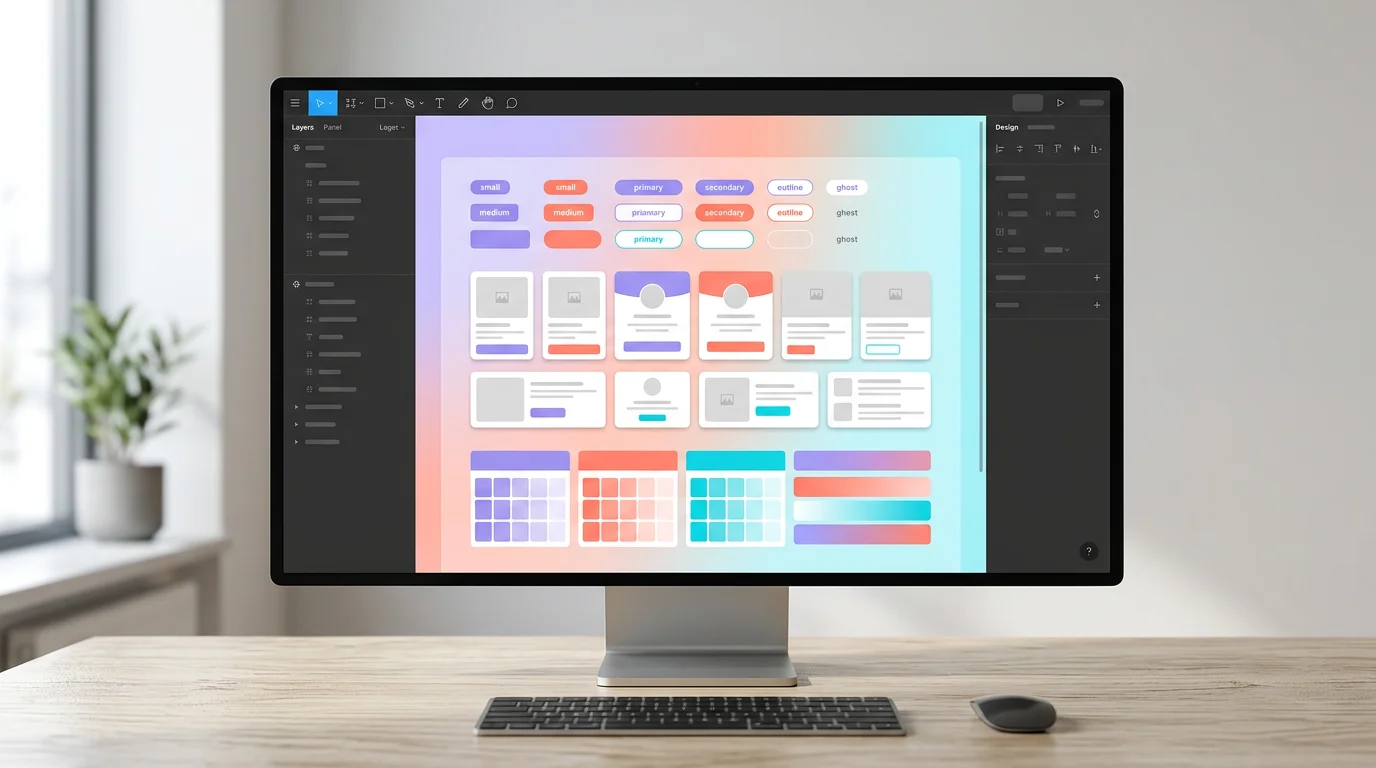
The tool ecosystem changed greatly in five years. Figma now holds 85% usage among interface designers, ahead of Adobe XD at 8% and Sketch at 5% (UXTools Design Tools Survey, 2025). Adobe's proposed Figma acquisition was cancelled, so the tool remains independent and continues adding AI features.
Beyond the main design tool, Photoshop and Illustrator handle imagery and vectors. Principle or ProtoPie creates complex motion beyond Figma. Zeplin and Avocode support developer handoff, although Figma Dev Mode is replacing them.
Notion or Confluence supplies documentation, Slack or Teams communication, and Jira or Linear task tracking. Effective UI designers use six to ten tools daily and adapt the stack to each team and project.
| 01Tool | 02Main use | 03Monthly price | 042025 market share |
|---|---|---|---|
| 01Figma | Mock-ups, prototyping, design systems | Free to $75 a month | 85% |
| 02Adobe XD | Mock-ups, Creative Cloud integration | €24 a month (CC suite) | 8% |
| 03Sketch | Mock-ups (macOS only) | $10 a month | 5% |
| 04Adobe Photoshop | Photo editing and visual assets | €24 a month | Complementary |
| 05ProtoPie | Advanced animation and micro-interactions | Free to $13 a month | Niche |
| 06Zeplin | Developer handoff and specifications | Free to $8 a month | Declining |
Figma
Adobe XD
Sketch
Adobe Photoshop
ProtoPie
Zeplin
Salary depends on experience, location and employer type. A junior with up to two years starts at €30,000–€35,000 gross in the regions and €33,000–€38,000 in Paris (Glassdoor France, 2025).
With three to five years, salaries reach €38,000–€48,000. Seniors above five years earn €48,000–€60,000 and more in major technology groups or scale-ups. Design-system and accessibility specialists receive 10–15% above the average.
Freelancers charge €350–€600 before tax per day. Across 200 billed days this is €70,000–€120,000 in revenue before deductions. Malt reports a median French freelance UI day rate of €450 (Malt Freelance Barometer, 2025).
| 01Level | 02Experience | 03Gross salary/year (regions) | 04Gross salary/year (Paris) | 05Freelance day rate |
|---|---|---|---|---|
| 01Junior | 0–2 years | €30,000–€35,000 | €33,000–€38,000 | €300–€400 |
| 02Mid-level | 3–5 years | €35,000–€42,000 | €38,000–€48,000 | €400–€500 |
| 03Senior | 5–8 years | €42,000–€52,000 | €48,000–€60,000 | €500–€600 |
| 04Lead / Principal | 8+ years | €50,000–€58,000 | €55,000–€70,000 | €600–€800 |
Junior
Mid-level
Senior
Lead / Principal
Several routes lead into UI design. The conventional path is a three- to five-year qualification in graphic design, digital arts or multimedia. Specialist schools such as GOBELINS and Estienne offer interface-design programmes, while BTS Graphic Design and BUT MMI provide strong two-year entry routes.
Continuing education and bootcamps increasingly serve career changers. Ironhack, Le Wagon and OpenClassrooms offer intensive three- to nine-month programmes covering UI fundamentals, Figma and design systems.
Self-study is also possible through Coursera, Udemy and YouTube, but the portfolio remains decisive: recruiters assess completed work before qualifications. Reproduce existing interfaces such as Spotify or Airbnb, then create original projects demonstrating design thinking as well as execution.
Étape 1
Study colour theory, typography, composition and visual hierarchy through a qualification or certified online programme. Typical duration: six to 12 months.
Étape 2
Practise Figma daily, including components, auto layout, variables and interactive prototypes. Rebuild familiar interfaces. Typical duration: three to six months.
Étape 3
Create personal projects or redesign existing applications. Every case should show research, wireframes, mock-ups and reasoned design decisions.
Étape 4
Field experience matters. A three- to six-month agency or start-up placement introduces deadlines, client feedback and developer collaboration.
Étape 5
Choose design systems, accessibility or motion. Attend local meet-ups, share work on Dribbble and Behance and build a LinkedIn presence.
UI designers rarely work alone. They collaborate with UX designers on architecture, front-end developers on implementation, product managers on priorities and art directors on brand coherence. This cross-functional work is stimulating but demands strong communication (Deloitte Digital, 2024).
Agency designers move rapidly across varied client projects. Start-up designers often cover several roles and join product decisions. In large companies they focus on one product inside a structured design team.
Remote work is established. According to APEC's 2025 Barometer, 72% of UI designers work remotely at least two days a week. Browser-based Figma removed the technical barrier. SMEs improving website user experience can recruit remotely from a much wider pool.
For an SME, a UI designer changes website performance. A professional appearance generates 38% more visitor trust according to Stanford Web Credibility Research (2023). Hiring well begins with the right criteria.
The portfolio matters more than the CV. Ask for three detailed projects: the problem, proposed visual solution and measurable results in conversions, time on page or satisfaction. Good designers explain decisions rather than merely showing attractive website mock-ups.
For limited budgets, a freelancer offers good value, charging €3,000–€8,000 for a complete visual redesign with no fixed employment cost. Malt, Comet and Crème de la Crème provide reviewed profiles. For recurring work above three days a week, permanent or part-time employment becomes cheaper from month six.
“We thought a 'pretty website' was enough. The UI designer reconsidered every button, form and transition. Within three months, our quote-request rate rose by 40%. The return was visible in the first quarter.”
A 28-person metal-parts manufacturer in Lyon hired a freelance UI designer to redesign its brochure site for €5,500 over 12 days. The designer created a full design system, rebuilt product pages with clear technical visuals and reduced the contact form from eight fields to four.
After six months, quote requests rose from 12 to 27 a month. Contact-page conversion increased from 3.2% to 7.8%, while cost per lead fell from €85 to €38. The documented design system let the internal team maintain consistency without external help.
The common route is Lead UI Designer or Design Manager, managing three to eight designers and adding recruitment, management and product vision (LinkedIn Economic Graph, 2025).
A second route is Product Design, combining UX and UI to lead end-to-end product creation. Start-ups and scale-ups particularly value someone who can research users AND produce final mock-ups. To take this further, read User Research Consultant.
A third route is specialisation in design-system engineering, digital accessibility or interface motion. Specialists earn 15–25% above market. Accessibility is increasingly strategic under stronger European duties; our web accessibility guide explains them.
Freelancing attracts senior designers. After five agency or in-house years, independence offers project choice and potentially higher income. Strong freelancers build a personal brand on Dribbble, Behance and LinkedIn and win work through referrals.
Our UI designers create bespoke SME interfaces with design systems, responsive mock-ups and interactive prototypes. Results are measurable within months.
Keep exploring
A project in mind?
Start with a free audit grounded in your goals, website and data.
Discutons de votre projet
30 min · Google Meet
Choisissez le créneau qui vous convient dans notre calendrier. On analyse votre situation avant l’appel pour aller droit au but.
Finding available times...