
Refonte

La Refonte insights
A UX consultant may audit an interface or conduct research with users. This guide separates the two, defines the deliverables and explains what shapes the budget.
Refonte

Design

SEO
A user research consultant gathers evidence from people who use, or may use, a product. They conduct interviews, usability tests and card-sorting sessions. Unlike a UX audit, which begins with an expert review of an existing interface, research involves real users. Hire this role separately when the question concerns needs and behaviour, not only the interface.
The specialism is useful during discovery, before fixing a feature or when a team does not understand why a journey fails. A general UX consultant may also conduct the research, but often covers audits, design and prototyping too. Our UX design guide explains that wider field.
A UX consultant analyses a digital product, frames research questions and helps a team make interface decisions. The assignment may combine an expert audit, research with users, prototyping and usability testing.
Unlike a UX designer embedded in a product team, a consultant usually works on a defined question and hands over the evidence, decisions and files. The proposal should state which activities involve users and which rely on expert review.
This profile summarises the role and the points to check in a candidate. A qualification does not replace an example of a research protocol, deliverable and product decision based on the findings.
The market rate comes from Malt and the participant range from the GOV.UK Service Manual. The six phases below provide a practical structure for comparing proposals. Our page on Website Structure explains the next step.
€506
average day rate for experienced active UX designers on Malt in France (2026)
4–8
participants generally used in one qualitative round according to GOV.UK
6 steps
from scoping to transfer of the method
1 owner
named to continue measurement after handover
The assignment must begin with a precise question, not a list of tools.
UX audit. The consultant reviews the interface, journeys and accessibility, then links every finding to a screen or task.
User research. Interviews, observation, usability tests and card sorting answer different questions. The protocol must state who is involved and how notes are analysed.
Prototyping. A simple diagram may test a journey order; a complex interaction may require a clickable Figma prototype.
Usability testing. Representative users perform defined tasks. The report separates what was observed, what was said and the consultant's interpretation.
Handover. The consultant explains the findings, supplies usable evidence and documents how the team can continue.
Étape 1
The consultant turns the business problem into research questions and defines scope, relevant users, expected decisions and schedule.
Étape 2
Heuristic interface analysis, user-journey mapping, RGAA/WCAG accessibility audit and analytics review. Deliverable: a prioritised audit report.
Étape 3
Interviews, observation or usability tests with profiles recruited for the research question. GOV.UK indicates that four to eight participants are generally used in one qualitative round.
Étape 4
Low-fidelity wireframes followed by high-fidelity designs in Figma. Every proposal is assessed against insights from the research phase.
Étape 5
Users complete realistic tasks on the prototype. The team corrects observed problems, then tests the points that remain uncertain.
Étape 6
The consultant supplies files, implementation notes, research limits and a measurement plan that the team can continue.
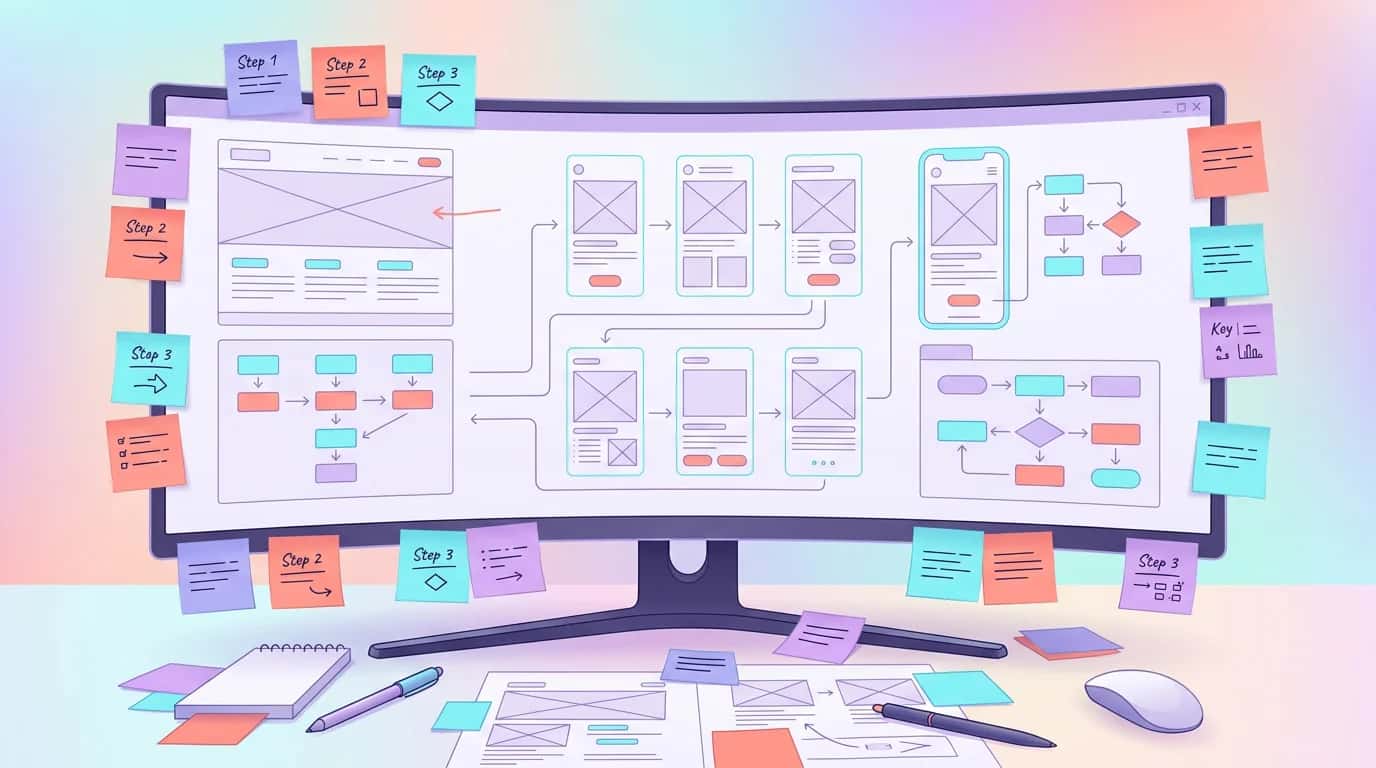
Each phase should pair a client input with a deliverable and a quality signal. Before scoping, gather product objectives, available data, support feedback, interface access and known constraints. Name the person authorised to make decisions.
Request documents that let the team resume the work: research brief, interview guide, recruitment criteria, anonymised notes, findings, linked decisions, Figma files and measurement protocol. The traceability between question, method, evidence and decision matters more than a heavy format.
A warning sign is that screens are designed before research questions exist, participants do not match target users, or every observation becomes an immediate recommendation. A sound engagement separates user evidence, expert interpretation and the points that remain untested.
Input: objectives, constraints, data and decision owner. Deliverable: brief with research questions and scope. Quality signal: each question corresponds to a concrete decision.
Input: product access, analytics and support feedback. Deliverable: located, prioritised findings. Quality signal: expert observations are separated from hypotheses to test.
Input: target profiles and recruitment constraints. Deliverable: protocol, guide, anonymised notes and synthesis. Quality signal: every participant meets a criterion defined in advance.
Input: technical constraints and real content. Deliverable: journeys, wireframes or a prototype. Quality signal: each choice relates to evidence and uncertain areas remain visible.
Input: priority tasks and a testable version. Deliverable: protocol, observations and iteration decisions. Quality signal: observed errors are separated from stated preferences.
Input: implementation and measurement owners. Deliverable: files, decisions, limitations and measurement plan. Quality signal: the team can explain and continue the method.
A short interface audit is not priced like user research with recruitment, sessions, analysis and a prototype. The quote should separate preparation, fieldwork, analysis, design and handover.
Malt lists an average 2026 day rate of €506 for experienced active UX designers in France. It is a market reference, not a guaranteed La Refonte price, and does not automatically include participant incentives, travel or testing software.
Compare quotes using the same scenario: days, profiles, deliverables, meetings and revision conditions. A defined, short assignment may answer one question without committing to a full rebuild.
Skills may overlap, but position and deliverables differ. A consultant handles a defined question, a UX designer follows the journey over time and a UI designer handles the visual form of the interface.
| 01Criterion | 02UX Consultant | 03UX Designer | 04UI Designer |
|---|---|---|---|
| 01Position | External, defined engagement | Internal, product team | Internal, design team |
| 02Primary focus | Strategy, research and audits | Journey design | Visual design and components |
| 03Deliverables | Audit, recommendations and prototypes | Wireframes, flows and prototypes | Designs, design system and assets |
| 04Tools | Figma, Maze, Hotjar and Optimal Workshop | Figma, Miro and UserTesting | Figma, Sketch and Adobe CC |
| 05Freelance day rate | Depends on research, audit and autonomy | Depends on duration and product responsibility | Depends on visual scope and deliverables |
| 06Typical education | Cognitive psychology, ergonomics or HCI | Design or ergonomics | Applied arts or graphic design |
| 07Engagement | Defined by scope | Permanent role or long engagement | Permanent role or long engagement |
Position
Primary focus
Deliverables
Tools
Freelance day rate
Typical education
Engagement
A UX consultant combines technical UX design skills with analytical ability and strong interpersonal intelligence. Their hybrid profile lets them work effectively with developers, marketing managers and senior leaders. A 2023 NNGroup study found that the most effective UX consultants master at least three user-research methods and have significant digital project-management experience.
On the technical side, Figma proficiency has become essential in 2026, with 78% of UX professionals using it as their main tool (source: UXTools Design Tools Survey, 2025). Consultants must also know how to use behavioural analytics tools such as Hotjar, Contentsquare and FullStory to turn raw data into actionable insights. Knowledge of RGAA and WCAG 2.2 accessibility principles is essential: 96.3% of web pages have at least one accessibility error (source: WebAIM Million, 2024).
In terms of soft skills, the ability to synthesise complex problems and present clear recommendations to decision-makers distinguishes a good consultant from an outstanding one. Empathy, for users and stakeholders alike, underpins every successful engagement.
A defined engagement is appropriate when a product decision is blocked by missing evidence, the team lacks distance or nobody internally can run the required protocol.
Before a rebuild. An audit identifies visible interface problems and opens the steps of a UX redesign; user research verifies how people understand content and complete tasks. Keeping these separate prevents an expert opinion from becoming a general claim.
When a journey fails. Analytics show where people leave, but rarely explain why. Interviews and usability tests may expose an ambiguous label, missing information or a step that conflicts with real work.
Before launching a product. Research can verify needs, constraints and vocabulary before every screen is produced.
For an internal tool. Observing real work reveals duplicate entry, workarounds and hard-to-find information. The deliverable should connect tasks, session evidence and an order of correction.
This comparison does not repeat the unsupported figures in the previous version. It shows the expected change in decision-making: evidence that can be reviewed, explicit limitations and a method the team can continue.
A consultant can establish the first protocol and hand it over. Internal ownership becomes useful when the same user questions return with every product change.
Document research questions, recruitment criteria, consent, observation notes, decisions and measurement. For sensitive research or complex recruitment, retain specialist support; for recurring, lower-risk work, name an internal owner and review the protocol regularly.
Compare candidates using the same question and scope.
Assess the evidence, not only the visuals. Ask for the context, protocol, limitations and decision attached to a previous assignment. Attractive designs alone do not demonstrate research quality.
Check the method. The consultant should distinguish expert review, user evidence and assumptions. A proposal should name participants, deliverables and acceptance signals before promising outcomes.
Check relevant experience. Sector familiarity can shorten scoping, but it does not replace a sound protocol. Review their knowledge of web design, accessibility and the type of users concerned.
Clarify ownership and handover. Your organisation should receive the files, anonymised evidence, decisions, limitations and implementation notes needed to continue without hidden dependency.
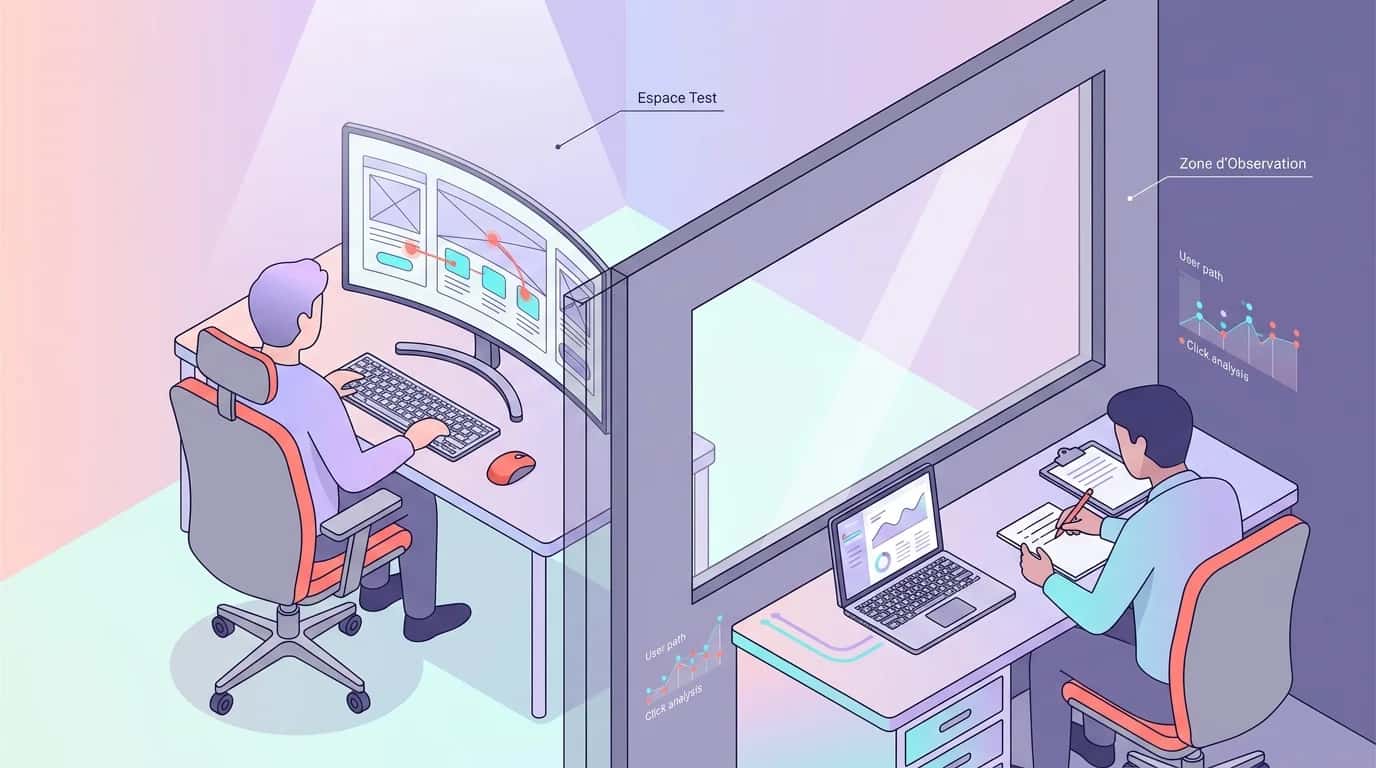
We scope the question, separate expert review from user research and supply the evidence, prototype and handover plan.
Last updated: August 2026
Keep exploring


A project in mind?
Start with a free audit grounded in your goals, website and data.
Discutons de votre projet
30 min · Google Meet
Choisissez le créneau qui vous convient dans notre calendrier. On analyse votre situation avant l’appel pour aller droit au but.
Finding available times...