Refonte

La Refonte insights
46% of Google searches have local intent. Learn the three pillars of local SEO, common SME mistakes and practical actions for reaching Google's Local Pack this week.
Refonte

SEO

IA
Local SEO is the practice of improving a business's visibility in Google's location-based search results. When someone searches for 'plumber Lyon' or 'restaurant near me', local SEO determines which businesses appear. According to Google (2024), 46% of all searches have local intent and 76% of people making a local search on a smartphone visit a business within 24 hours.
This guide covers the three foundations of local SEO, common SME mistakes and practical steps for reaching Google's Local Pack this week. If your website has serious technical problems, an SEO redesign remains the most effective starting point before a local strategy.
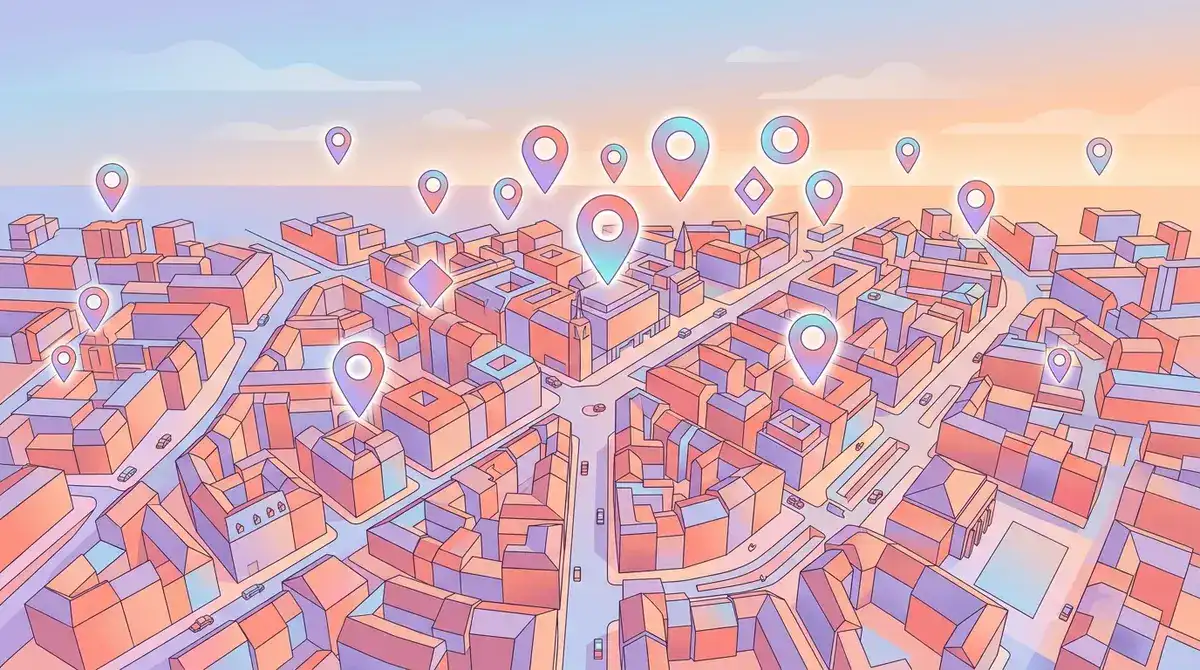
Local SEO targets searches with an explicit or implicit geographical dimension. A search for 'baker' from a phone in Bordeaux is treated differently from 'history of baking' on a desktop. Google detects proximity intent and displays the Local Pack, local organic results and Google Local Services ads. According to BrightLocal (2024), 98% of consumers use the internet to find local businesses.
Conventional SEO chiefly relies on content quality, backlinks and domain authority. Local SEO adds Google Business Profile, formerly Google My Business; consistent Name, Address and Phone citations across the web; and recent customer reviews. A site can rank nationally while remaining locally invisible if these are neglected. On-page SEO optimisation with localised tags is the essential technical foundation.
Any professional receiving customers in person or serving a defined area: tradespeople, medical practices, restaurants, estate agents, lawyers, local consultants and retailers. Multi-location businesses need a separate Google Business Profile for each physical address. Home-service providers such as plumbers, electricians and removal companies qualify for a special listing that hides the physical address.
'Near me' searches rose by 500% over five years according to Google (2023). The trend continues: mobile now accounts for 63% of website visits in France (Statista, 2024). Consumers want immediate, local answers. If your business misses the first local results, prospects go straight to competitors without knowing you exist.
According to BrightLocal (2024), 87% of consumers read online reviews before visiting a local business. The Local Pack alone attracts 44% of search-result clicks for local queries. A complete, active Google Business Profile receives seven times more website clicks than an incomplete one. For nearby businesses, these figures represent direct revenue.
An osteopathy practice in Nantes had an incomplete GBP and no reviews, generating around eight new patients a month online. After completing the listing, gathering 47 reviews in three months and adding schema.org LocalBusiness data, it reached 31 new patients a month: a measured 287% rise in online appointments over six months. A florist in Toulouse received 12 weekly calls from Google. Professional photos, current hours and weekly posts lifted this to 34 calls within two months.

Google ranks local businesses by relevance, whether the activity matches the search; distance, how close the business is; and prominence, whether web signals show it is known and dependable. All three can be influenced. Prominence, based on reviews, NAP citations and local backlinks, can improve within weeks through a sound method.
Google Business Profile is the starting point of local SEO. The free listing displays your business in Maps and the Local Pack. According to Google (2024), complete listings receive 70% more visits than incomplete ones. Claiming it is not enough; optimisation must be methodical.
Go to business.google.com to create or claim your Google listing. If Google already created a duplicate, claim it rather than adding another because duplicates harm rankings. Verification usually uses a postcard to the physical address or, for eligible businesses, a phone call. Once verified, manage it from the interface or mobile app.
Enter the exact business name without artificial keywords, the most precise primary category, complete address, a local non-premium telephone number, website URL, accurate opening hours including holidays, and a description of up to 750 characters covering main services and area. The primary category is the strongest relevance signal: 'Plumber' is more precise than 'Home services'.
Listings with at least ten photos receive 42% more direction requests according to Google (2022). Publish photographs of the premises, team and recent work. Google Posts share offers, events and news: publish at least twice a month to keep the listing active. Months of inactivity send a negative signal.
A NAP citation is any mention of your Name, Address and Phone elsewhere online, including directories, sector sites, local newspapers and blogs. According to Semrush (2024), inconsistent NAP information is among the five leading reasons a local business misses the Local Pack. Google compares these details to validate your physical existence.
If the address appears as '12 rue de la Paix' on your site, '12 rue de La Paix' on Pages Jaunes and '12 Rue Paix' on Yelp, Google may see three entities. This fragments local authority. Audit existing citations before optimisation. BrightLocal and Semrush scan them, find inconsistencies and list priority directories where you are absent. Begin with a website audit to identify NAP signals on your domain.
Priorities include Pages Jaunes, Yelp France, Tripadvisor where relevant, Kompass, Europages, 118000.fr, Mappy and specialist directories. Tradespeople should consider Houzz and Travaux.com; health professionals Doctolib and PagesJaunes Santé; restaurants TheFork and Tripadvisor. Prioritise high-traffic directories and those linking to the site, as SEO value varies by referring domain.
Google reviews are local SEO's third pillar and the most visible to prospects. According to BrightLocal (2024), 49% of consumers trust online reviews as much as personal recommendations. Google considers volume, average rating, recency and your replies. A business with 80 reviews at 4.2 stars often outranks one with 15 at 4.8.
Reviews combine popularity and trust. Google reads regular new reviews as evidence of ongoing business. A listing receiving three a month advances more than one with 50 old reviews and no recent activity. Replies to positive and negative reviews increase website clicks by 12% according to Google (2023), proving the business is active and attentive.
Send a direct Google review link by text or email when the customer is most satisfied: after successful delivery, a completed consultation or finished service. Create a short link in GBP and add it to order confirmations, invoices and email signatures. Never reward a positive review; Google penalises this and may remove the listing.
Local on-page optimisation explicitly signals your service area in website code and content. It complements GBP, with each strengthening the other. Strong technical SEO is essential: a slow or insecure site handicaps local strategy even with a perfect listing.
The home-page title should contain the main activity and location: '[Activity] in [City] | [Business name]'. For example, 'Plumber in Lyon 6 | Dupont Plomberie, Two-hour response'. The meta description should reinforce the local promise with opening times, area or response time. These tags do not directly lift Maps position, but improve clicks on local organic results.
schema.org LocalBusiness markup helps Google understand a physical entity rather than plain text. Add JSON-LD to the home page with name, address fields, telephone, openingHours, geo coordinates, url and priceRange. For several premises, create a separate page and markup for each address. French SMEs underuse this schema, creating a direct opportunity.
Local landing pages such as 'Our services in Bordeaux' target high-converting long-tail searches. Content must be unique, not duplicated with only the town changed. Include real neighbourhoods, service areas, local partnerships and testimonials. Google detects and penalises empty 'city' pages. One strong page per main area beats 20 thin ones.
The Local Pack, or Maps top three, appears above results for local searches. According to Semrush (2023), it attracts 44% of all clicks. Reaching it is local SEO's main objective and separate from conventional organic ranking. Businesses with weak websites can appear through a well-optimised GBP.
Google selects three businesses using relevance, distance and prominence. Relevance matches GBP category to the query. Distance uses the person's position or searched location. Prominence uses reviews, citations, local backlinks and recent listing activity. Track positions with BrightLocal Local Rank Tracker or Semrush local tracking.
The most actionable factors are a complete, active GBP with photos, posts, Q&A and review replies; consistent NAP citations; and recent review volume. Backlinks from regional press, associations and partners also strengthen prominence. You cannot control proximity, but a clear GBP service area helps Google display the listing for suitable searches.
Managing local SEO without data is driving without a dashboard. These tools cover essential SME needs. For website traffic and conversions, Google Analytics remains essential alongside Google Search Console for organic-search data.
Search Console displays local queries generating impressions and clicks. Filter by country and analyse searches containing place names. Google Business Profile Insights reports listing views, calls, direction requests and website clicks. SMEs often underuse this data despite its ability to show which actions had an effect.
BrightLocal audits NAP citations, tracks local positions and analyses reviews across platforms from $39 a month. Semrush Listing Management synchronises NAP information across major directories. Whitespark identifies citation opportunities by sector and area using a particularly extensive database. Screaming Frog remains the benchmark for technical website audits.
French SMEs repeatedly make the same local SEO mistakes. They are methodological rather than strictly technical. Correcting them often provides the fastest visibility gain with no additional investment.
Inconsistent NAP: audit citations with BrightLocal and standardise every occurrence. Incomplete GBP: fill every field and schedule two monthly posts. Ignoring negative reviews: reply factually within 48 hours. No structured data: add LocalBusiness JSON-LD to the home page. Duplicate GBP listings: report duplicates from the dashboard. Duplicate city-page content: write distinct content for every local page.
If you are unsure about current local presence, a complete website audit systematically finds and prioritises these problems.
If you have no active Google Business Profile, create, verify and complete it first. This has local SEO's best effort-to-result ratio. If it exists, audit NAP consistency across ten priority directories and establish a review process using a direct Google link. Both actions take under a day and produce measurable effects within two months. To take this further, read vintage bike shop.
For a technically weak website with slow loading, no HTTPS or poor architecture, local strategy remains limited until the foundations are sound. A complete SEO redesign addresses technical foundations while embedding local best practice from the outset. Technical SEO optimisation and local SEO are not separate disciplines; they reinforce one another wherever your business meets Google.
SEO audits, content strategy and technical optimisation to help you climb Google.
A project in mind?
Start with a free audit grounded in your goals, website and data.
Discutons de votre projet
30 min · Google Meet
Choisissez le créneau qui vous convient dans notre calendrier. On analyse votre situation avant l’appel pour aller droit au but.
Finding available times...