

Refonte

La Refonte insights
Compare Google Search Console, Rank Math, Screaming Frog, Ubersuggest, Ahrefs and Semrush by team, budget and the time genuinely available to act on reports.
Refonte

SEO

IA
An SME without an SEO specialist should start with Google Search Console, then add Rank Math when the website uses WordPress. Someone with a few hours available each week can add Screaming Frog or Ubersuggest. Semrush and Ahrefs become useful when a team tracks several websites, competitors or campaigns and can turn reports into actions.
SEO software for an SME is only as valuable as the decisions it enables. A data-rich interface does not fix a page that is not indexed, content aimed at the wrong search or a slow website.
This guide compares seven tools by function, official price checked on 24 August 2026 and the level required to act on their reports. When choosing an SEO platform, pay less attention to feature count and more to the time your team has to analyse the data and deliver corrections.
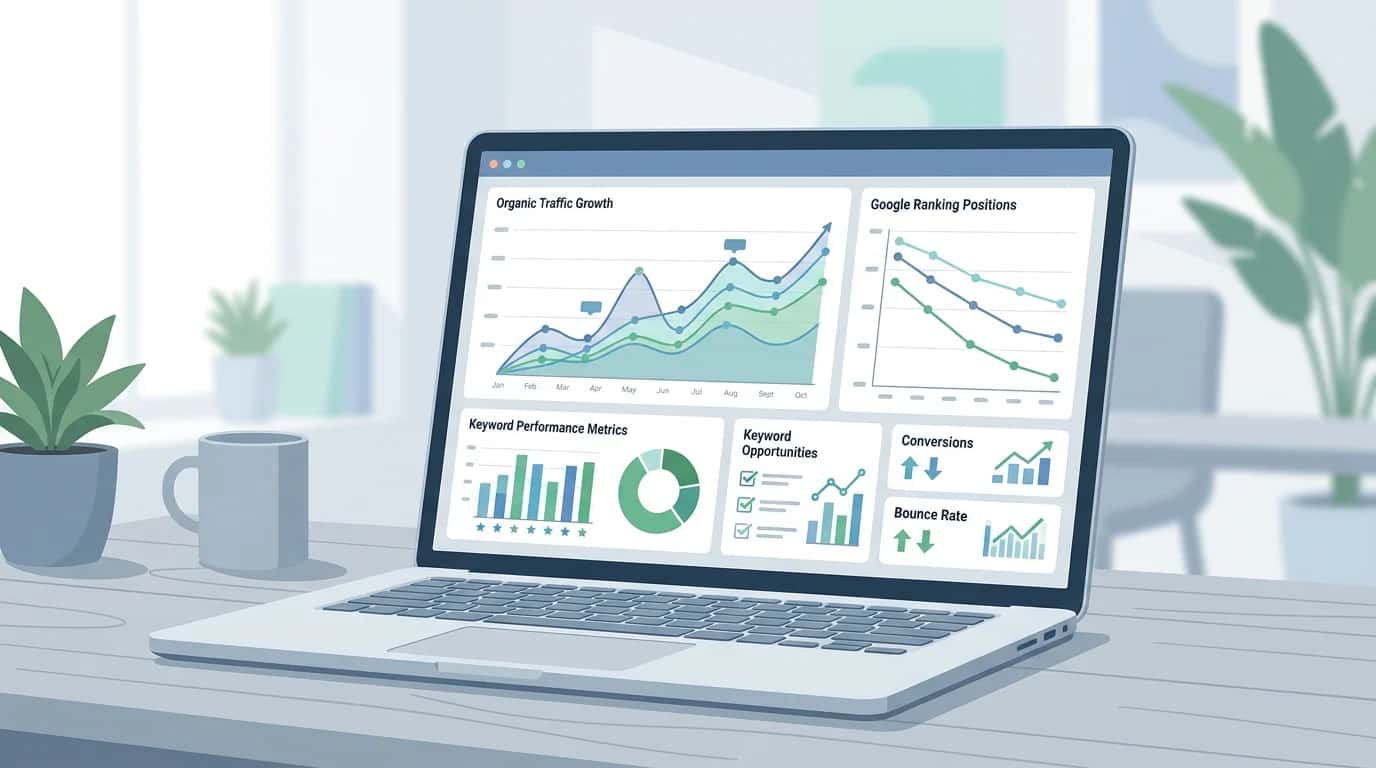
Semrush and Ahrefs combine keyword research, competitor analysis, rank tracking and site audits. That depth helps a team managing several workstreams every week. It can slow a business owner who only needs to know which page to fix next.
The interfaces also use specialist vocabulary: crawling, authority, backlinks, intent, cannibalisation and structured data. If no one can connect the findings to an action, the monthly budget creates no value. The most expensive product becomes a dashboard that is opened but does not change a decision.
The right SME SEO tool is the one the team genuinely opens, understands and turns into corrections. Define who reviews it, how much time that person has and who will deliver what they find.
With limited time, ask four questions: which pages appear in Google, which are losing clicks, which errors block crawling and which content needs an update. Google Search Console covers the first review. Add another tool when you need competitor data, a technical crawl or keyword-portfolio tracking.
Your SME SEO strategy should remain understandable without the tool. Software collects and organises signals. It cannot choose the commercial priority, the page to create or the correction your team can deliver this week.
Google Search Console is a free Google service. It shows the queries that display your website, impressions, clicks, average position and the pages concerned. Indexing reports also help verify that Google can discover and crawl the content.
Start here when no one currently owns SEO. The data describes your own presence in Google, without competitor estimates. You can find a page that appears often but attracts few clicks, monitor a correction and receive alerts for certain problems.
Its limit is clear: Search Console does not analyse competitors' keywords or backlinks and does not crawl the website as deeply as a dedicated technical tool.
Semrush combines keyword research, competitor analysis, backlinks, rank tracking and site audit. SEO Toolkit Pro costs $139.95 a month on monthly billing. Annual billing was shown as $117.33 a month, charged for the year, when checked on 24 August 2026.
It suits someone running several SEO workstreams and using the reports every week. If an SME only needs to monitor its own website, start with Search Console and list the missing functions before subscribing.
Ahrefs examines the pages, keywords and inbound links of a domain. Starter costs $29 a month and uses credits. It includes Site Explorer, Keywords Explorer, Site Audit and Rank Tracker with lower limits than team plans.
This level suits targeted competitor research. Check credits, export rows and tracked-keyword limits before buying because regular reporting can consume them quickly.
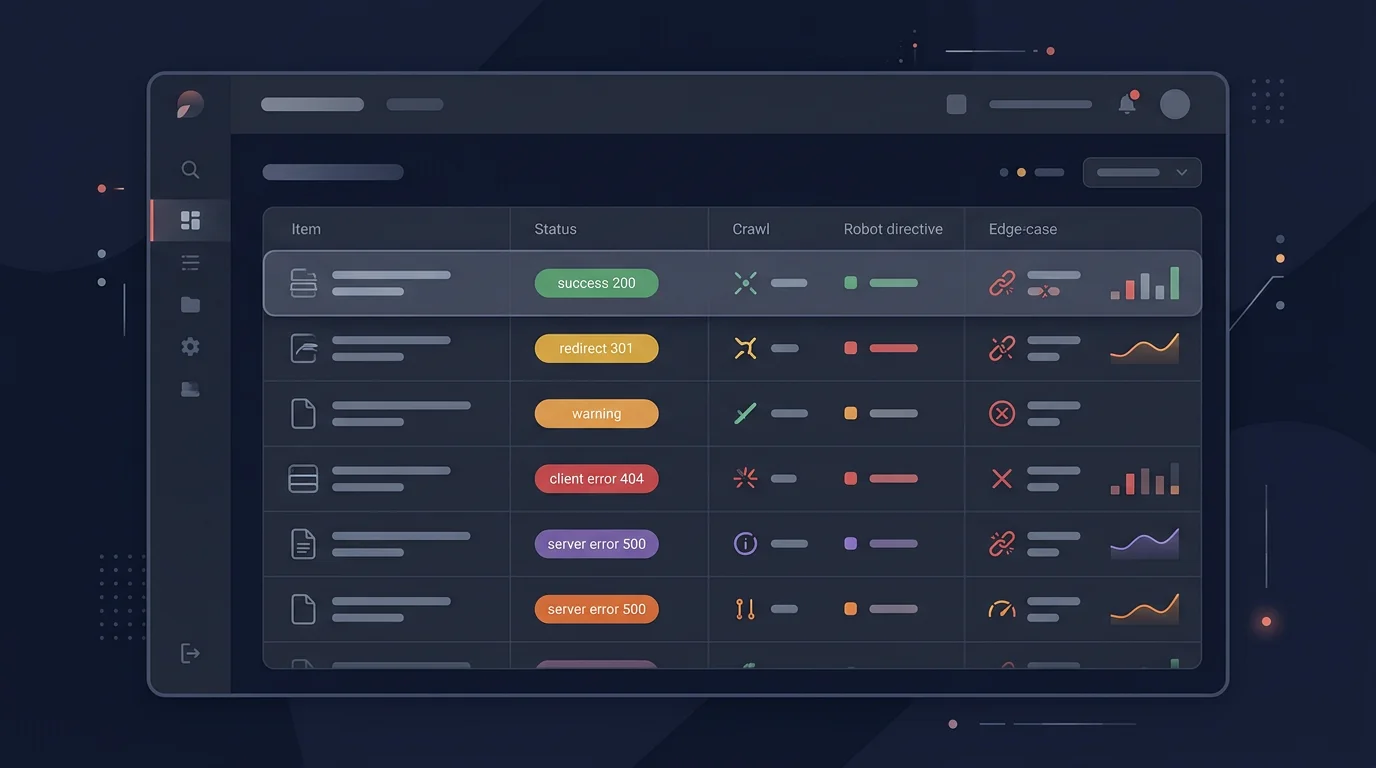
Screaming Frog SEO Spider crawls links and collects HTTP statuses, titles, descriptions, indexation directives, canonicals and other technical data. The free version is limited to 500 URLs per crawl.
The paid licence costs €245 a year per user. It removes the crawl limit and adds saved projects, configuration, JavaScript rendering and advanced features. Reading the output still requires an understanding of 200, 301 and 404 responses and the ability to prioritise findings.
Yoast SEO and Rank Math add controls for titles, descriptions, indexation, sitemaps and structured data to WordPress. Their indicators support publishing, but a green score does not guarantee rankings or commercial quality.
The free versions cover routine settings. Rank Math Pro was listed at €7.99 a month excluding VAT, billed annually. Yoast SEO Premium cost $118.80 a year excluding VAT for one website when checked on 24 August 2026. Confirm currency and tax at checkout.
Choose the extension already understood by the person who publishes. Changing plugin only to obtain a different score creates work without automatically improving the content.
Ubersuggest combines keyword research, a basic audit, rank tracking and domain comparison. Its Individual plan cost $29 a month for one user and one domain on 24 August 2026.
It suits an SME that needs more than Search Console without adopting a broader suite. Compare search, tracked-keyword and competitor limits with the team's actual rhythm.
| 01Tool | 02Monthly price | 03Core SME features | 04Skill level | 05Best for |
|---|---|---|---|---|
| 01Google Search Console | Free | Indexation, rankings, real clicks | Beginner | Quick diagnosis and basic tracking |
| 02Rank Math | Free (WordPress) | On-page optimisation, metadata, Schema | Beginner | Writing and publishing content |
| 03Ubersuggest | $29/month | Keywords, basic audit, rank tracking | Intermediate | Tight budgets, sites below 500 pages |
| 04Screaming Frog | Free / €245 a year | Complete technical audit and crawling | Intermediate | In-depth one-off audits |
| 05Ahrefs Starter | $29 a month | Backlinks and competitor keywords | Intermediate | Focused competitor analysis |
| 06Yoast SEO Premium | $118.80/year excl. VAT | WordPress on-page, redirects, Schema | Beginner | High-volume WordPress publishing |
| 07Semrush Pro | $139.95/month | Full audit, keywords, tracking, competitors | Advanced | Complete, multi-stream SEO strategy |
Google Search Console
Rank Math
Ubersuggest
Screaming Frog
Ahrefs Starter
Yoast SEO Premium
Semrush Pro
Budget includes the subscription and the time spent reading reports and completing the work. A $29 tool is expensive when no one acts on its alerts. A $139.95 suite can be coherent when it replaces several products the team genuinely uses.
Calculate return from your own data. Illustrative example, not a market average: 500 organic visits at a 2% enquiry rate produce ten contacts. If one becomes a €5,000 client, attributable revenue is €5,000. Production cost, staff time and margin still need to be deducted before judging the investment.
Before subscribing, write down the decision each report should trigger. If you cannot name it, test the free version or stay with Search Console.
Search Console is simpler to open than a complete suite, but its reports already require an understanding of queries, pages, impressions and clicks. Semrush and Ahrefs add competitor data. Screaming Frog requires the ability to interpret HTTP responses and indexation directives.
The required level depends on the question. A director may monitor a few commercial pages, a communications lead may work on queries and content, and a technical profile can use a complete crawl. Choose a platform that fits the role, not an abstract feature list.
If the team has data but cannot prioritise it, our SEO Studio guide separates monitoring, audit and decision-making before a tool change.
Rank Math and Yoast run inside WordPress. Search Console works with any CMS once ownership is verified. Screaming Frog crawls a public URL independently of the publishing system. Semrush, Ahrefs and Ubersuggest can also analyse external domains.
During a website redesign, protect URLs, redirects, metadata and structured data. Plugin compatibility does not replace a migration plan.
Check that the chosen plan includes the alert you need and that the right person receives it. Search Console can report indexation, security or spam problems; paid products may schedule position, backlink or audit monitoring.
An alert with no owner is still only a notification. Define who reads, decides and delivers the fix. That circuit matters more than report frequency.

Semrush, Ahrefs and Screaming Frog produce findings. None knows your production constraints or the commercial value of each page. A report can flag duplicate titles, redirects or missing links without writing or implementing the correction.
Prioritisation is the hard part. An error across one hundred pages may come from one template. A page without clicks may have a title, intent or offer problem. Fixing every report row in display order wastes time.
Use the SEO management tools guide to separate collection, diagnosis and action planning. Software measures; a responsible person connects the data to the website, commercial context and available resources.
Build capability when access and reports exist but no one can choose corrections, write a brief or measure the change. Delegate when the team cannot deliver the plan, a migration affects many pages or architecture, technical work and content must change together.
A website SEO audit can define scope, priorities and ownership before production. Do not use an arbitrary error count or a fixed number of stagnant months. Decide according to who has the time, access and ability to change the website.
Start with Google Search Console. Verify ownership, open the Performance report and select a commercial page receiving impressions. Compare its queries, title and the need it answers. Our page on Google Ads vs SEO explains the next step.
Then run the free version of Screaming Frog when the website has fewer than 500 URLs. Export 404 errors, redirects and duplicate titles. Group problems by template rather than fixing rows one by one.
On WordPress, use Rank Math or Yoast to check metadata and indexation while publishing. Continue measuring impressions and clicks in Search Console, which remains the source tied to your actual presence in Google. To take this further, read WordPress SEO.
If reports conflict or the team cannot prioritise, do not immediately buy another product. Return to the page objective, the value of its conversion and the person who can implement the correction.
External auditing becomes useful when architecture, technical issues and content need to be addressed together, or when no one can own delivery.
Start free when one person monitors one website. Add a paid product when the team can name the missing function, the report it will use and the decision that follows.
Then measure indexed pages, impressions, clicks and enquiries on the pages changed. A higher plugin score is not a commercial result.
If data exists but remains difficult to interpret, invest first in an owned method. The next software choice will then have a purpose, an owner and a clear use.
SEO audits, content strategy and technical optimisation to help you climb Google.
When the problem is collecting data, start with Search Console and a focused crawler. When the problem is prioritisation, assign an internal owner and use a documented method. When delivery spans architecture, technical changes and content, use an SEO audit to define responsibilities before production.
The right sequence is evidence, decision and delivery. Buying a broader platform before the team can follow that sequence only creates another report queue.
Last updated: 24 August 2026
A project in mind?
Start with a free audit grounded in your goals, website and data.
Discutons de votre projet
30 min · Google Meet
Choisissez le créneau qui vous convient dans notre calendrier. On analyse votre situation avant l’appel pour aller droit au but.
Finding available times...